
Criminal Cases in the Chesterfield County Courts
South Carolina Circuit Court is the state's court of general jurisdiction. Its criminal side is the Court of General Sessions. Chesterfield County sits in the Fourth Judicial Circuit, and felony files and other General Sessions matters are kept by the Clerk of Court. The courthouse is at 200 West Main Street, Chesterfield, SC 29709. The clerk's main and General Sessions number is 843-623-2574, and public hours are Monday through Friday, 8:30 a.m. to 5:00 p.m.
Lower-level criminal records do not all move into that clerk's file. Chesterfield Central Magistrate Court hears statutory summary criminal and traffic matters at the same West Main Street address. Its phone is 843-623-9009, and its public hours are Monday through Friday, 9:00 a.m. to 4:30 p.m. Bond Court sits at the detention center on Goodale Road. A case arising under a town docket stays with the relevant municipal court. The county clerk cannot supply those separate municipal files.
The South Carolina Judicial Branch Circuit Court overview shows how the criminal division fits within Circuit Court.
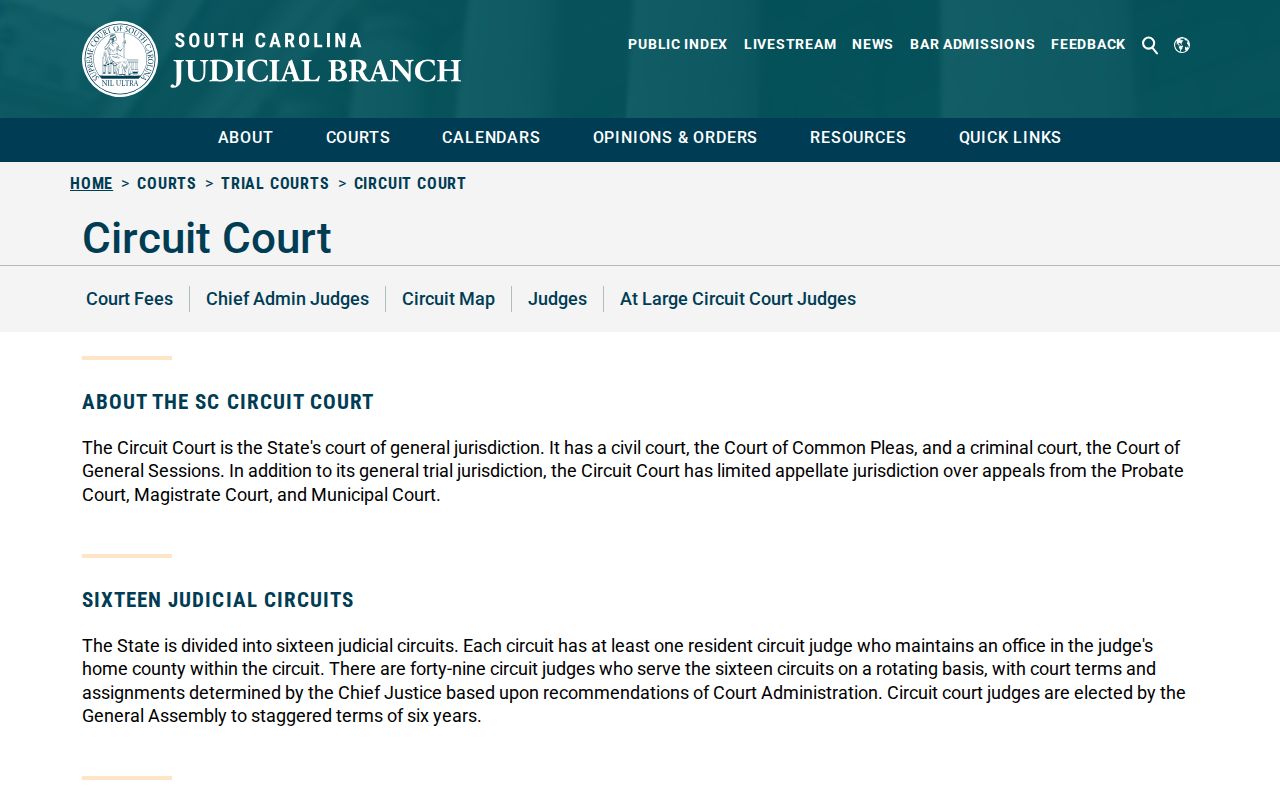
That court structure is the first clue to choosing the right Chesterfield County case-record custodian.
Chesterfield County General Sessions Counter
The Chesterfield County Clerk of Court is the file custodian for General Sessions. It keeps the charging record, docket activity, disposition, and sentence material filed with that office. A person seeking the full official file should contact the clerk instead of treating a state repository report as a duplicate of the court docket. Mail for the clerk goes to PO Box 529, Chesterfield, SC 29709-0529; the published fax is 843-623-6944.
The official Chesterfield County courthouse listing identifies the county's Judicial Branch location.
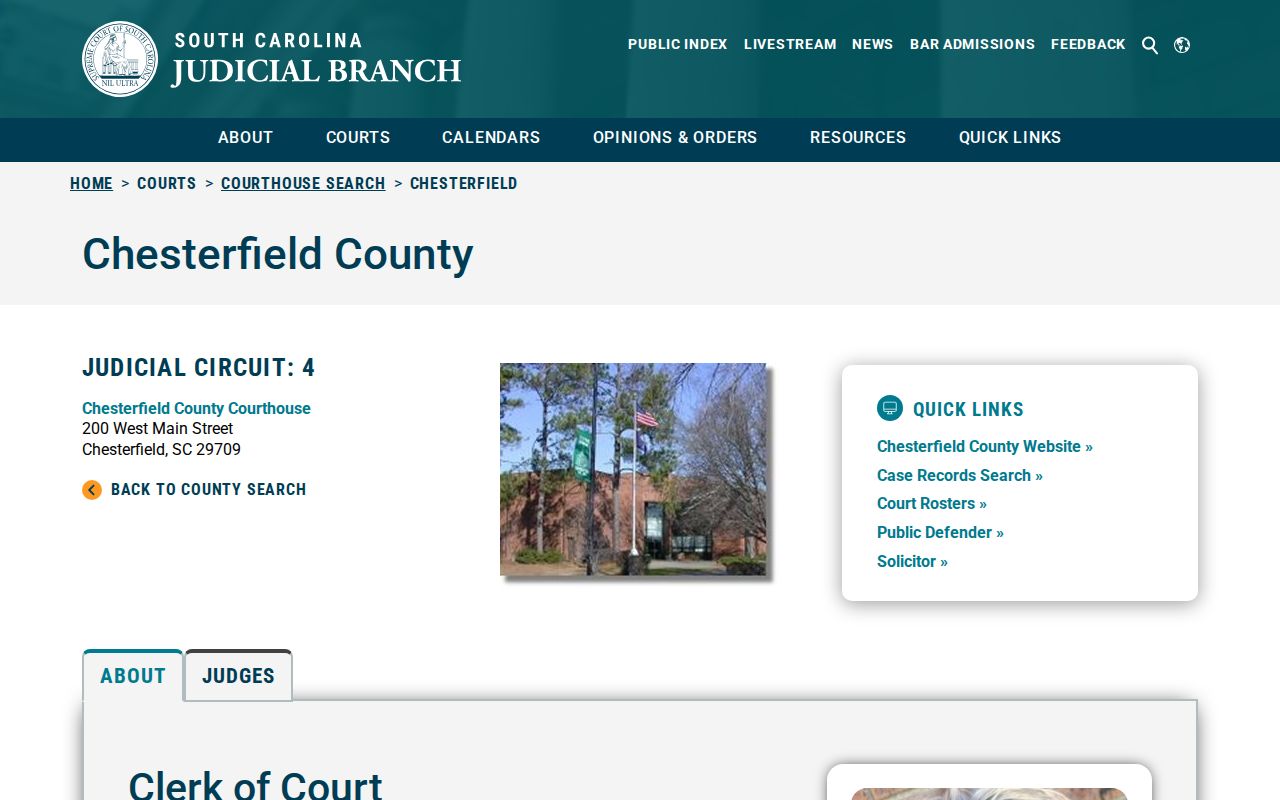
The listing helps confirm the court and county before a reader requests a Chesterfield County criminal case file.
Chesterfield County Clerk Statement Limit
The clerk also offers a $10 local statement of matters filed in its office. The subject must appear in person with photo identification and provide a Social Security number and date of birth. That statement expressly excludes Magistrate Court cases. It is useful when a name search is ambiguous, but it is not a statewide criminal-history report and does not replace a municipal or magistrate file.
The county's Clerk of Court page supplies the local statement terms, hours, and contact details.
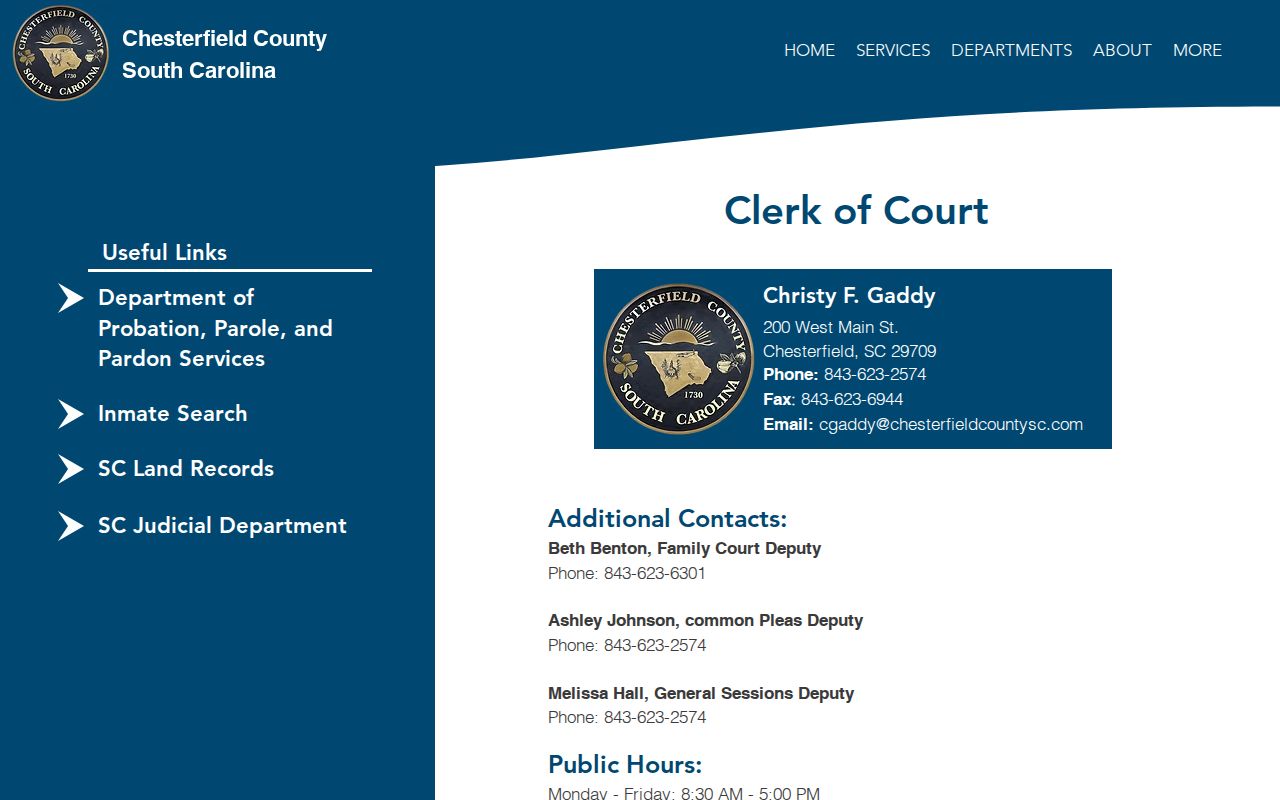
This local clerk channel matters most when an online case detail lacks the document or certification needed.
How to Search Case Records
The Chesterfield Public Index is the main online route for General Sessions court cases. It states no login or search fee. The live interface can sometimes return a technical error, so keep the court counter and phone as fallbacks. Search with a known case number when possible. General Sessions numbers use a four-digit year, the letters GS, a two-digit county code, and a five-digit identifier. Preserve leading zeroes.
- Decide whether the charge belongs in General Sessions, Central Magistrate, Bond Court, or a municipal court.
- Open the Chesterfield Public Index and choose the General Sessions court-type tab for circuit criminal cases.
- Enter the exact case number or the warrant or ticket number. Use party criteria only when the precise identifier is unavailable.
- Open the result and read each charge, status, event, bond entry, and disposition separately.
- Ask the proper clerk for the official file, a plain copy, or certification when the online detail does not settle the question.
| Field or control | Type | Required | Use |
|---|---|---|---|
| Court-type tabs | Tab | Yes | Choose General Sessions for circuit criminal matters. |
| Case Number | Text | Alternative | Use year, GS, county code, and five-digit ID. |
| Warrant/Ticket Number | Text | Alternative | The official tutorial allows this in place of a case number. |
| Party or name criteria | Text | No | Availability and labels can depend on the portal view. |
| Search | Button | No | Runs the query after the chosen criteria are entered. |
The official Chesterfield Public Index is the county-specific trial-court search.
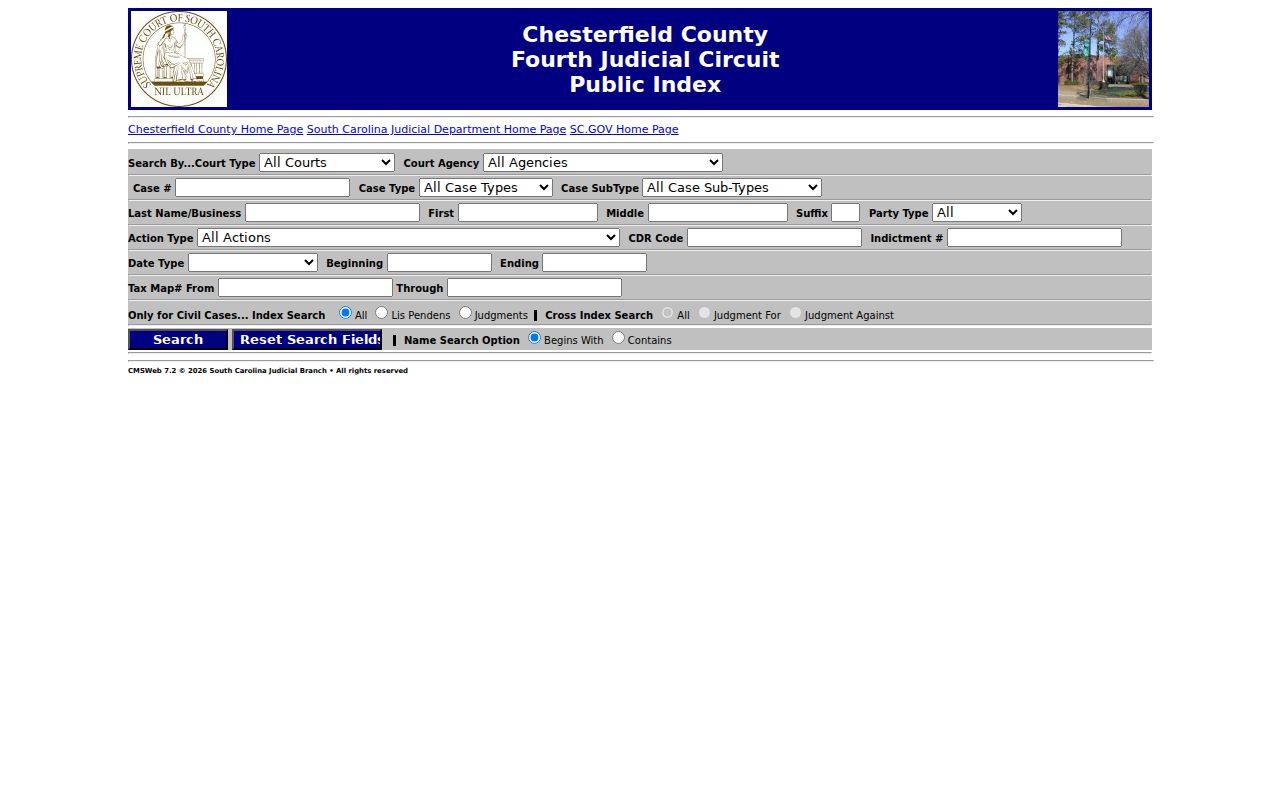
The screen supports a targeted case search, but the clerk remains the source for official copies.
Missing Chesterfield County Municipal Cases
A city charge may not appear where a General Sessions searcher expects it. Chesterfield County tells readers to contact the individual municipal court for a municipality case. That is a custody rule, not proof that no record exists. Start with the city named on the ticket, summons, arrest paperwork, or notice. Then use the Judicial Branch municipal-court directory to locate the correct court contact.
County summary matters belong with Central Magistrate, while town matters stay with that town's court. A person searching both levels should record the court name, case or ticket number, charge date, and party name. Those details help the clerk distinguish similar names and locate an archived file. If Public Index fails, call the proper court and ask about inspection, copies, certification, and archive retrieval. No complete current criminal-copy fee schedule was established beyond the clerk's $10 statement.
The county Magistrate Court page explains the local court split and publishes Bond Court details.
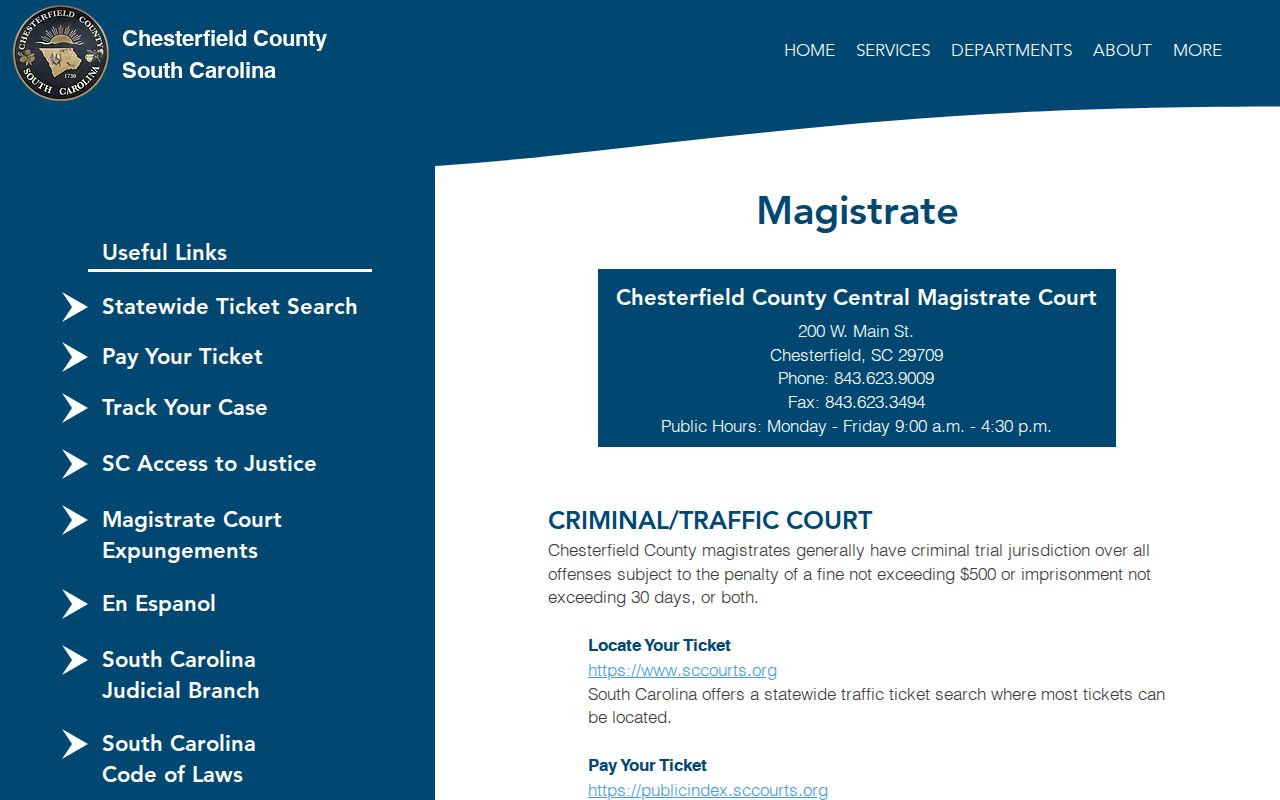
Those contacts provide a direct fallback for summary and first-appearance records outside the General Sessions clerk's file.
What the Case File Shows
A Chesterfield County court case file is organized around a prosecution, not just an arrest. Public Index categories can include the case number, parties, filing and disposition dates, charges, warrants or tickets, status, actions and motions, court dates, bond, and some financial information. The paper or official clerk file may also contain filed pleadings, sentencing sheets, or documents not downloadable from the public view.
| Case Number and Court | Identifies the year, court type, county, case ID, and record custodian. |
|---|---|
| Charging Entry | Shows the filed accusation, charge text, and any warrant or ticket link. |
| Docket Events | Lists hearings, motions, filings, and other recorded case actions. |
| Bond and Dates | May show bond information and scheduled court dates and times. |
| Disposition | Records the outcome of each charge, such as guilty, dismissed, no-billed, or not guilty. |
| Sentence | May include custody, suspended time, probation, financial assessments, and restitution after conviction. |
Read each count on its own. One Chesterfield County case can contain charges that end in different ways. A status marked disposed means a terminal court event occurred. It does not, by itself, mean that the person was convicted.
Chesterfield County Court Roster Search
A docket detail and a court roster answer different questions. The case detail records events already entered in one file. A roster helps locate scheduled court activity. Readers who know the court and date can check the Judicial Branch roster tool, then confirm changes with the clerk because a public schedule is not a certified record and hearings can be moved.
The official South Carolina court roster search supplies that schedule layer.
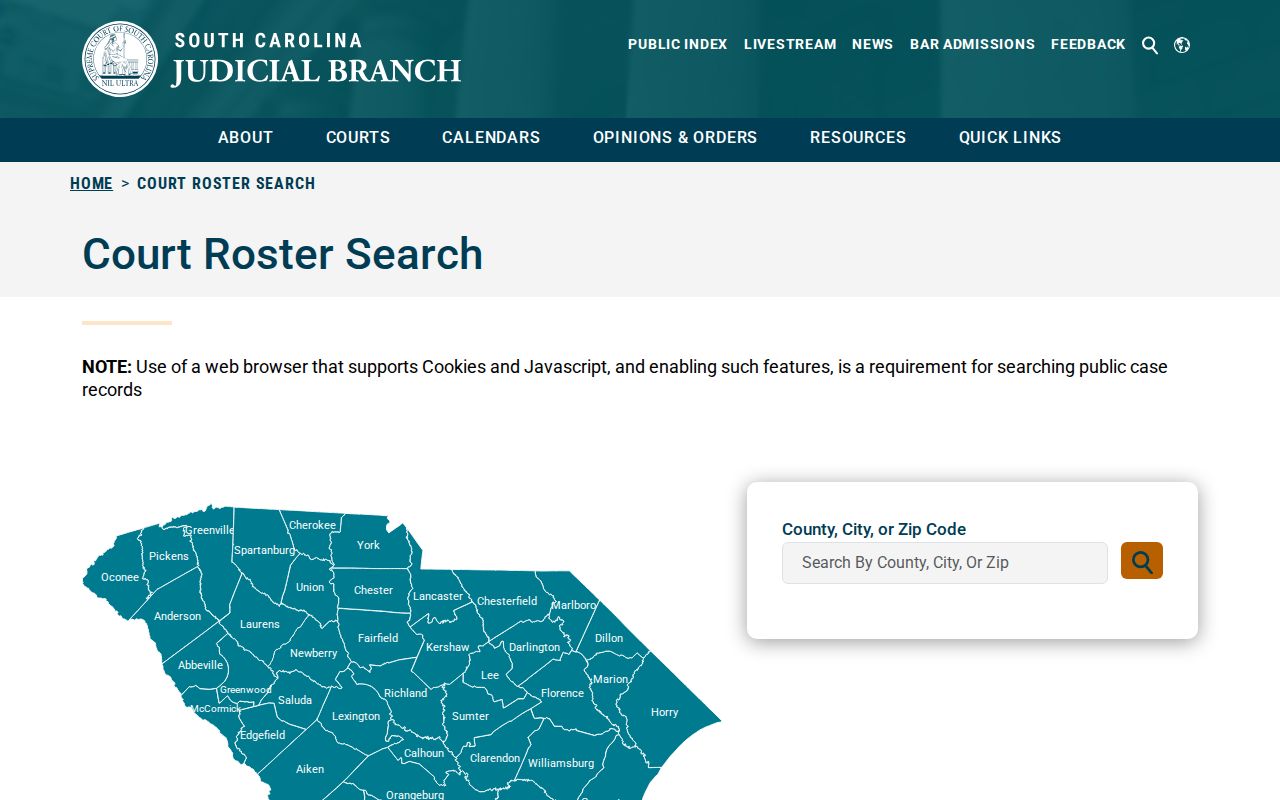
The roster is best used alongside the Chesterfield County case number and direct clerk confirmation.
Note: A scheduled hearing can change, so verify its date and time with the court before relying on the roster.
Stages of a Criminal Case
A Chesterfield County criminal case can begin with a warrant or arrest, followed by an initial appearance and bond review. Summary matters may proceed on a ticket, warrant, or complaint. General Sessions cases may proceed through indictment. A returned true bill is a formal accusation and is not a conviction. Arraignment records the plea, while later docket events can reflect discovery, motions, hearings, and prosecutor review.
Some eligible matters may move through Fourth Circuit programs such as Pre-Trial Intervention, Traffic Education, Alcohol Education, or a Worthless Check alternative. Other cases end by plea or trial. The final record must be read charge by charge for a guilty finding, dismissal, nolle prosequi, no-bill, or acquittal. Sentencing can add custody, suspended time, probation, financial assessments, or restitution.
Case flow: Charges Filed → Arraignment → Pretrial → Plea or Trial → Disposition → Sentencing
Reading Chesterfield County Case Outcomes
Short status labels can be easy to misread. The safest method is to pair the case status with the disposition recorded for each charge. If a record appears incomplete, ask the court whether a later order or corrected entry exists. The full Chesterfield County criminal case record remains the better source for prosecution outcomes than an initial booking entry.
- Pending or Open
- No final judgment has been entered in the court record.
- Disposed or Closed
- A terminal event occurred, but the label alone does not establish guilt.
- Nolle prosequi
- The prosecutor formally declined to continue that charge, often shown as nol pros or nolle prossed.
- No-billed
- The grand jury did not return a true bill of indictment.
- Acquitted
- The factfinder returned a not-guilty result after trial.
These terms describe different outcomes. None should be reduced to a simple yes-or-no arrest history.
Chesterfield County Appeal Case Records
Circuit Court has limited appellate jurisdiction over magistrate and municipal matters, but later appellate records do not live in the county trial index forever as one unified file. A reader following an appeal should begin with the trial case number, note the appeal event, and then use the appellate system for the higher-court docket. This prevents a failed Chesterfield Public Index search from being mistaken for the end of the case.
The South Carolina Appellate C-Track search provides the separate appellate-case channel.
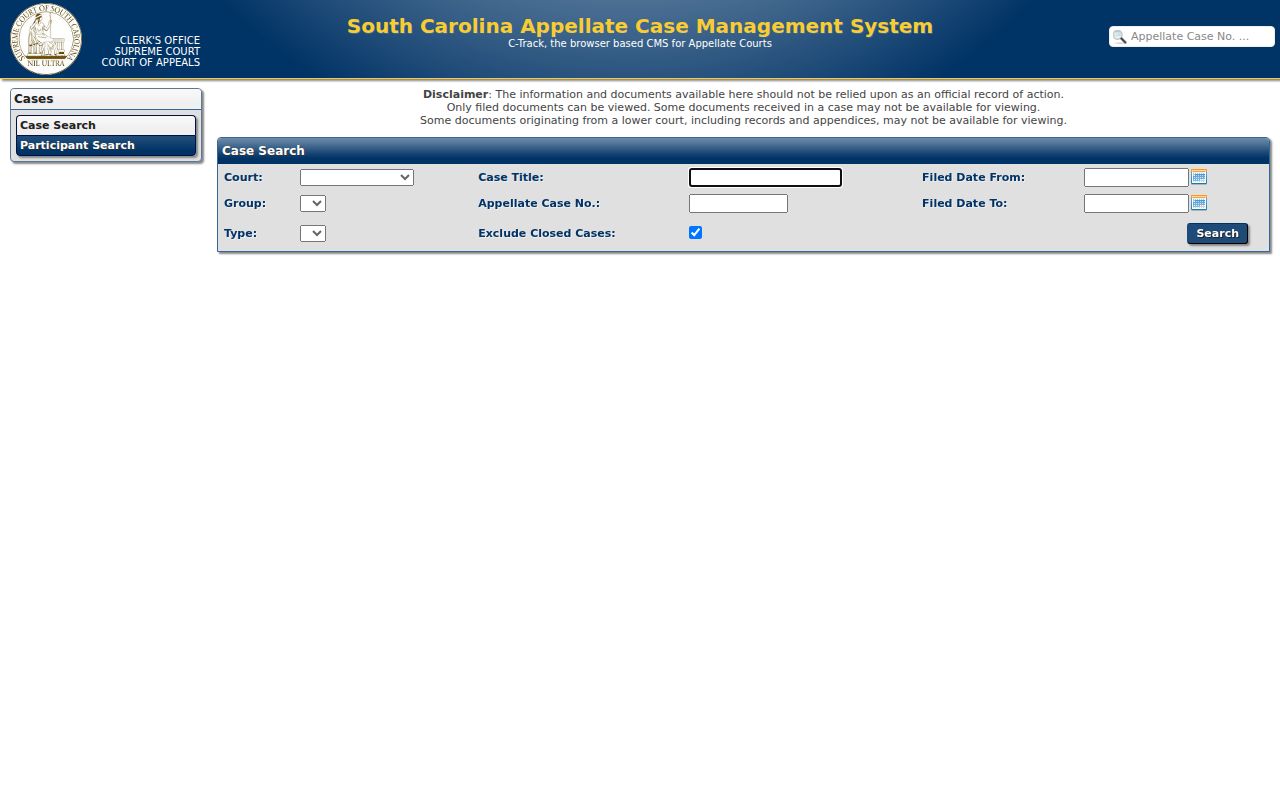
C-Track complements the county trial docket; it does not replace the originating Chesterfield County clerk file.
Access & Restrictions
South Carolina's Freedom of Information Act allows access to public agency records under reasonable rules, subject to exemptions. Court access also follows court rules and orders. Juvenile material, protected victim information, financial account numbers, Social Security numbers, and records covered by an expungement or sealing order are not ordinary public-index content. A FOIA request cannot override those restrictions or force a court to create a new record.
Online viewing is also distinct from bulk distribution. Rule 610 places controlled procedures around requests for bulk court information. For an individual Chesterfield County case, use the public index as a lead and the originating clerk as the final source. When the index returns an error or a file is older, archived, or absent, call the court and ask about in-person inspection, mail requests, current copy charges, certification, and retrieval time.
Public access: Review the South Carolina Freedom of Information Act for agency-record access and the Rule 610 process for bulk court information.
A missing public result can reflect the wrong court, a portal problem, restricted content, an expungement order, or a lag. It is not proof that no case ever existed.